Before the Feed, There Was the Fold: Inside the Race to Digitize Frog Fandom's Paper Trail
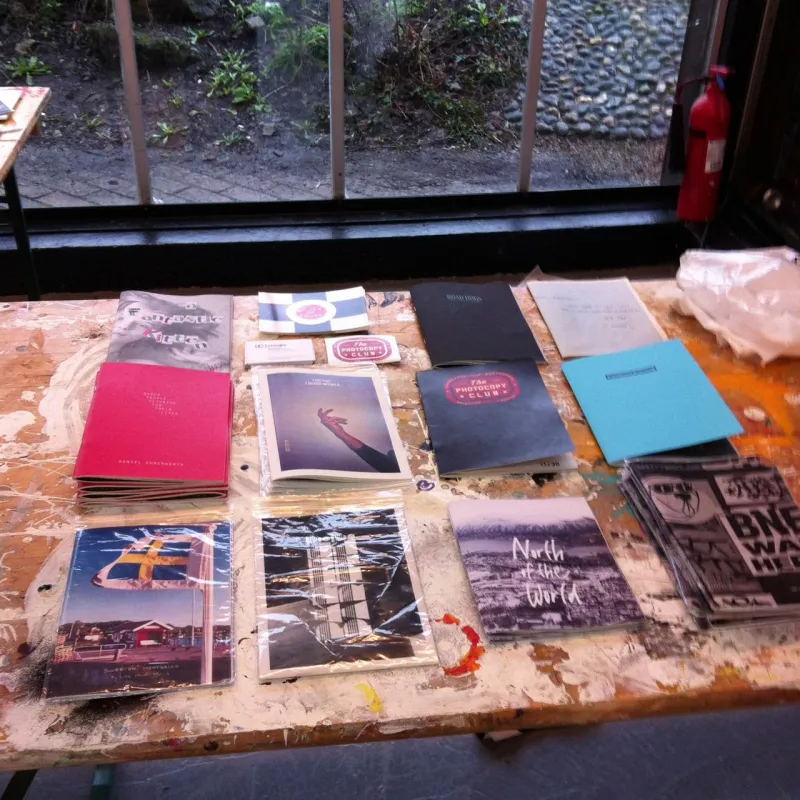
Photo: vintage zines and photocopied fan publications on a table with scanner, via i.pinimg.com
There is a version of Pepe history that lives in server logs and screenshot lore, and then there is the version that lives in a banker's box in a rent-controlled apartment in Oakland, slightly water-damaged and smelling faintly of 2009.
The second version is the one Marisol Vega-Trent cares about. She's the lead archivist on the Swamp Folio Project, a volunteer-run effort to digitize the forgotten paper ecosystem of early frog fandom — zines, mini-comics, printed forum digests, and photocopied reaction sheets that circulated years before the meme had a name most people recognized.
"People think memes were born on the timeline," Vega-Trent told us over a shaky Zoom connection from a scanning lab that used to be a garage. "No, babe. Memes were born in Kinkos. Somebody paid for that copy in quarters."
The Zine Era of the Amphibian Internet
Between roughly 2006 and 2012, before imageboards fully swallowed fan culture and before social media flattened everything into infinite scroll, small pockets of fandom ran on physical media. Conventions had folding tables. LiveJournal communities had PDF swaps. And a handful of very committed weirdos — many of them queer, many of them broke, all of them funny — produced limited-run zines about a laconic green frog and the increasingly specific emotional states he was being asked to represent.
These weren't mainstream publications. Print runs of 40. Staples instead of bindings. Covers drawn by hand, sometimes by the same person who wrote the jokes, laid out the pages, and drove the copies to a comic con in New Jersey in a Corolla.
"It was total DIY or die," says Devon Okafor, a contributor to the long-gone zine Croak Quarterly, whose complete run is one of the archive's crown jewels. "We were doing meme curation before 'curation' was a job. If a frog drawing made the cut, it's because six of us screamed about it in a group chat that ran on dial-up-era patience."
Why Queer Fandom Was the Engine
Here's the part that rarely makes the official meme history: a disproportionate number of these early zine creators were queer. The archive's intake survey — yes, they surveyed the contributors — found that a majority of the surviving contributors identified as LGBTQ+, and many describe the zine scene as their first creative community.
That tracks. Queer fandom has always been a remix culture. Taking a character nobody intended for you, deciding he's yours, and building an entire vernacular around him? That's not a new internet phenomenon. That's a generations-old survival skill with better graphic design.
"The frog was a projection screen," explains Dr. Hana Lindqvist, a media studies professor at a large Midwestern university who studies fan labor. "Queer creators saw in Pepe the same thing they'd seen in decades of pop culture figures — a vessel flexible enough to hold irony and sincerity at the same time. The zines were where that flexibility got stress-tested."
Many of the jokes we now consider native to social media — the hyper-specific reaction, the ironic sincerity, the elaborate in-group caption — show up in these zines in embryonic form. One 2010 issue of Croak Quarterly contains what the archivists believe is an early ancestor of the modern "feels" reaction, drawn in ballpoint pen on lined paper and captioned by hand.
The Scanning Operation, Explained
The technical side of the Swamp Folio Project is more serious than its subject matter suggests. The team works with a flatbed scanner normally used for archival photography, captures at 600 DPI, and stores everything in redundant, museum-grade servers with geographically separate backups. Every item gets cataloged with metadata: creator (when known), approximate print date, print method, and condition notes that read like hospital charts ("coffee ring, lower right, sentimental value intact").
The hard part isn't the scanning. It's the finding.
"Paper doesn't have a search function," Vega-Trent says. "We put out calls on every platform we could think of. People have found zines in storage units, in a closet in Portland, in one heartbreaking case inside a book donated to a library sale. Every envelope is a little time capsule."
The project has recovered just over 300 items so far, and they're all eventually slated for free public access — because, as the team puts it in their mission statement, "fandom made this frog, and fandom doesn't paywall its own history."
The Receipts Matter
Why does any of this matter? Because ownership of culture is a story we tell, and stories get rewritten by whoever holds the archive. The dominant narrative of Pepe's history has been contested territory for a decade now, and the zine record tells a quieter, gayer, funnier origin story — one built by small communities trading hand-stapled humor because the mainstream had no room for them.
"Every scan is a counterargument," Okafor says. "You can't erase people who are backed up at 600 DPI."
The archive is still accepting submissions, and the team asks only one thing of potential donors: please, whatever you do, do not laminate. They've had to say this more than once.
The frog we post every day was folded, stapled, and carried across a convention floor by someone who loved him first. Now, finally, we can see their names.