Where Are They Now? A Class Reunion for the Class of 2016's Most Famous Frogs
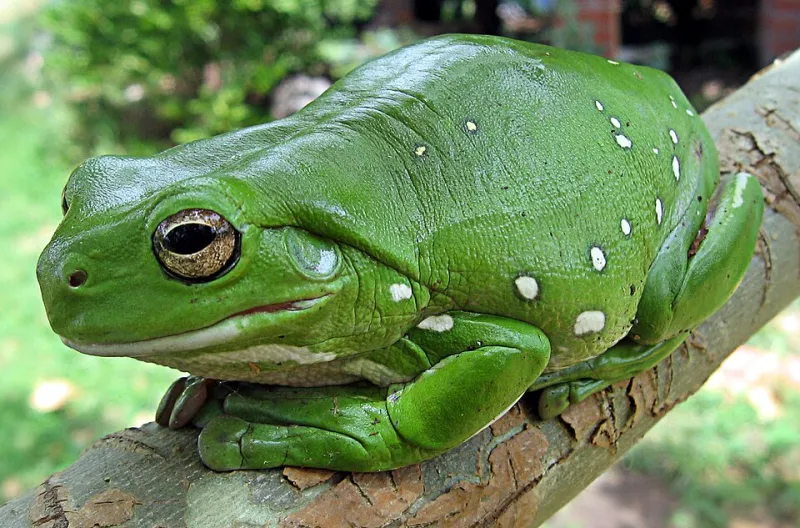
Photo: LiquidGhoul, Public domain, via Wikimedia Commons
Every group chat has one: the friend who still sends a 2016-era Pepe format like it's fresh produce. Nobody says anything. We simply tolerate it, the way we tolerate a cousin who still quotes The Office at Thanksgiving.
But it got us thinking — what actually happens to a meme after it peaks? Not the frog himself, who is eternal and possibly a tenant of several of our readers' phones at this very moment. We mean the formats: the specific caption templates, the reaction images, the whole grammar of a given year. We spoke with four longtime meme makers and archivists about where the class of 2016 ended up. Grab your yearbook. Some of these stories are sweet. Some are messy.
Smug Pepe: Retired to a Nice Porch in Boca
Smug Pepe — lips pursed, eyes half-lidded, radiating the confidence of someone who has never once checked their bank account — was arguably the format of the year. He was the visual equivalent of saying "okay, but I'm right though."
"He didn't fade because he stopped being funny," says Dana, a meme creator who's been posting since the Tumblr years. "He faded because he got absorbed. Smug Pepe stopped being a joke and became a personality trait. Once your meme is a personality trait, it's not a meme anymore. It's a lifestyle brand."
Today, Smug Pepe lives a quieter life. He surfaces occasionally in reply threads, usually under a take that aged poorly, deployed as a kind of gentle "we all saw that." He is our community's polite cough.
Sad Pepe: The Format That Refused to Leave the House
If Smug Pepe retired, Sad Pepe never got the memo. The rain-soaked, world-weary frog of 2016 became something bigger than a joke — he became a shorthand for a very specific feeling that words couldn't quite hold. Queer internet culture, in particular, adopted him like a stray.
"Sad Pepe worked because he was never really sad," explains Marcus, who runs a meme archive with over 40,000 saved images. "He was tender. There's a version of vulnerability that's easier to send as a frog at 1 a.m. than to type out. That doesn't expire. That's not a trend, that's a need."
And he's right. While other formats chased virality, Sad Pepe chased something closer to utility. He is, functionally, an emotional support amphibian. He'll be here long after we're gone, probably still captioned "feels bad man" under a screenshot of someone's situationship.
Rare Pepe: From Collector's Item to Family Heirloom
The Rare Pepe economy of 2016 was genuinely unhinged in retrospect — a full-blown speculative market for frog JPEGs, complete with authenticity discourse, watermarked "certificates," and at least one person we know who claims to have owned a Pepe so rare it had to be described rather than shown.
"The rarity thing was a parody of scarcity that became real scarcity, which then became a parody again," says Jessie, a digital artist who was deep in the Rare Pepe marketplace scene. "It was the most fun you could have with absolutely nothing at stake. Then blockchain people showed up and made it about money and everyone quietly left the party through the bathroom window."
The format survives, but differently. Today's "rare Pepes" are less about artificial scarcity and more about curation — the friend who has the perfect frog for a situation nobody else could have anticipated. Rarity went from a marketplace to a meritocracy. Honestly? An upgrade.
The Group Chat Immortals
Not every format died or thrived publicly. Some did something weirder: they went underground.
"The memes that 'peaked' in 2016 didn't disappear," says Dana. "They moved into group chats and became domestic. Nobody posts them publicly because they're not for the public anymore. They're inside jokes with a nationwide membership."
Marcus puts it more bluntly: "A meme going quiet doesn't mean it died. It means it got a partner and stopped going out."
Why Some Frogs Fade and Others Become Furniture
Talking to these creators, a pattern emerged. The formats that lasted weren't the funniest ones or the most viral ones. They were the ones that mapped onto a feeling rather than a moment. A joke about a specific news cycle expires with the news cycle. A frog that captures the exact texture of being overwhelmed, delighted, smug, or devastated? That's a vocabulary word. You don't retire vocabulary.
There's also something distinctly queer about the whole arc — about taking an image, living with it, remixing it, and eventually claiming it so thoroughly that its origins become almost beside the point. Our community has always been fluent in reclamation and reinvention. The frog simply joined the tradition.
The Reunion Photo
So here's to the class of 2016: the smug, the sad, the rare, and the deeply fried. Some of you bought condos in group chats. Some of you are archived in folders labeled "do not delete." All of you, at some point, made a stranger on the internet feel understood by a cartoon frog.
That's not a legacy. That's a family tree.