Thirty-One Days Without the Frog: Notes From a January Meme Fast
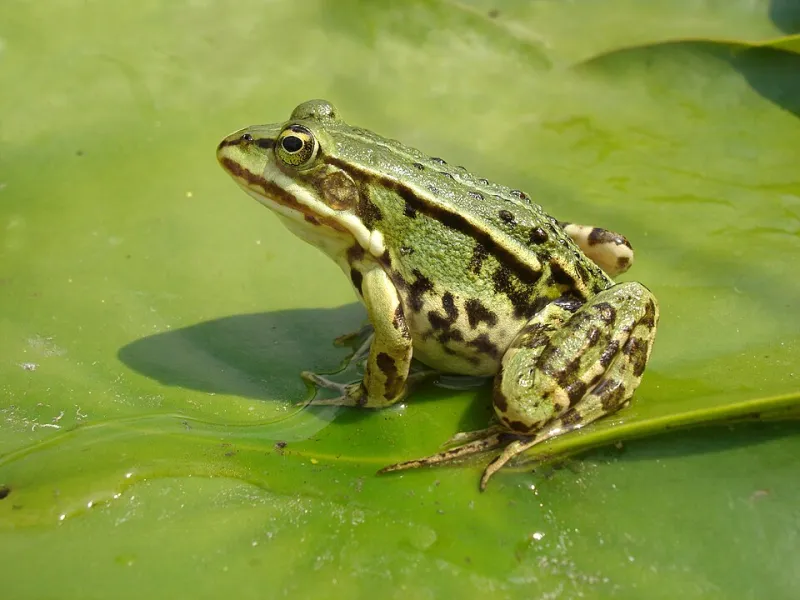
Photo: Grand-Duc, Niabot (edit), CC BY 3.0, via Wikimedia Commons
On the second day of January, I typed “lol” into a group chat and hit send with my whole body braced, because for the first time in about four years there was no frog attached to it.
Let me back up. At the end of December, in a fit of resolve that I now recognize as seasonal, I announced to three separate chats that I would be doing a Dry January, except instead of alcohol it was Pepe. Thirty-one days. No reaction frogs, no cursed toads, no deep-fried gremlins doing my emotional labor. Cold frog. Cold turkey.
The replies were, in order: “lmao okay,” “you'll last four days,” and a single image of a frog in a hospital bed with a heart monitor, which I chose to interpret as support.
Week one: the phantom send
The first thing to go was the reflex. I'd read something funny and my thumb would already be in the GIF drawer before my brain caught up. Studies on habit loops call this cue-and-craving; my group chat calls it “being normal.”
I caught myself doing it maybe thirty times a day. A friend's joke about her landlord. A genuinely unhinged headline at 11 p.m. A photo of someone's truly upsetting parking job. Each time: thumb, drawer, pause, close. The feeling that came up was not really withdrawal. It was something more like stage fright. Without the frog, I had to figure out what I actually thought and then type it in a font and everything.
By day five I was sending so many exclamation points that a friend asked, sincerely, if I'd been to the doctor.
Week two: replacements and small confessions
Nature abhors a vacuum, and so does a group chat. My frog-shaped hole got filled with things that were, in retrospect, worse: a lot of “hahaha,” a lot of “same,” a heart emoji deployed like a shrug. This is the reaction-image problem in miniature. When you remove the shorthand, you often don't replace it with eloquence — you replace it with mush.
So I tried something scarier. I started writing the sentence the frog would have carried. “That sounds exhausting, I'm sorry.” “I'm actually not doing great this week, which is why I've been quiet.” “You didn't deserve to be spoken to that way.”
Reader, the chats got longer. Some of them got genuinely good. In the middle of a perfectly routine Tuesday, a friend wrote back: “this is the most you've said in two years.” I did not cry at my kitchen table, and if I did, it's nobody's business but the frog's.
Week three: the group chat notices
The weird part started when people read my silence as a mood. Someone asked if I was mad at them. Someone else — correctly — noted that my usual frog-based warmth had been absent and asked whether everything was okay at home. Which, frankly, is a lot of emotional acuity for a thread that mostly consists of a running bit about a raccoon.
That's when the real realization hit. Being the person who always sends the frog is a job. It's not just posting; it's the work of keeping the room temperature right. The frog absorbs awkwardness, marks sympathy, ends conversations without anyone having to say “well, goodnight.” Somebody in every circle is doing that labor, and often it's the person who most needs someone to ask them the question for once.
By week three I answered honestly for the first time in that chat. And I kept answering. Which is a bigger deal than it sounds when your usual mode of intimacy is a JPEG and a prayer.
Week four: what the fast was actually about
Here's where I get a little preachy, and you're allowed to scroll. Our social lives now run on narrow-bandwidth signals — reaction images, a heart, a “frog for your trouble” — because those signals are cheap, low-risk, and never quite say anything you could be held to. I love that vocabulary. I've built a personality out of it. But efficiency is a tool, not a definition, and somewhere in there I'd let a meme do the work of telling my friends I loved them, which is a genuinely lazy way to love someone.
There's a queer-specific version of this, too. We learned young that being earnest gets you clocked, mocked, or worse, so we built a whole camp dialect where feelings arrive pre-packaged as a joke. It's brilliant and it's armor, and armor you never take off eventually becomes a personality.
I'm not arguing against the frog. I'm arguing against the frog as your entire spine.
The return
On January 31 at 9:42 p.m., I sent a single Pepe: the soft one, the one with the small smile and the lightly concerned eyebrows, captioned “we back.” Four reactions in under a minute. One friend replied with a photo of her actual human face doing the exact same expression, which is, I think, the highest possible honor.
And here's the part I didn't expect: it hit different. Not because I'd been deprived, but because I'd spent a month relearning which feelings actually belong to me and which ones I was outsourcing to a green guy with a tired face.
I'm not quitting. I'm not even cutting back permanently. But with the next New Year's reset about six weeks away, I've already decided to reinstate one thing from the experiment — a weekly frog sabbath, one day where the reaction images are off and the sentences are on. Consider it mutual aid for the people who love me.
The frogs will be there on the other side. They always are. You just want to make sure you're still there too — and that your friends know it in words, not just in pixels.